D8 Visa for Digital Nomads in Portugal: Everything You Need to Know
A complete guide to the D8 Visa. Understand the logic behind income verification, the updated financial requirements, and how to transform remote work into European citizenship.

The D8 Visa is a Portuguese residence permit aimed at professionals who work remotely and wish to live legally in Portugal, without depending on local employment. It allows them to reside in the country, access public services, and, after fulfilling the requirements, pave the way for citizenship.
Portugal has established itself as Europe's most desired office, attracting professionals seeking security and quality of life without giving up global careers. The D8 Visa emerged as a response to this demand, creating a legal bridge for those with geographical freedom. Unlike a tourist visa, it is a full residence authorization, aimed at those who can prove their sustenance is independent of the Portuguese economy. In simple terms: you bring capital and talent; Portugal offers infrastructure, stability, and quality of life.
The Financial Logic: How much is needed to live?
The main barrier to entry is financial. It is not enough to just have savings; it is necessary to demonstrate recurring cash flow that proves stability and economic independence. For 2025/2026, the applicant needs to prove average monthly earnings equivalent to four times the Portuguese minimum wage, about €3,280.00, in addition to maintaining a safety reserve of approximately €9,840.00, preferably in a Portuguese bank account.
Documents such as employment or service provision contracts that detail the remote activity are essential to demonstrate that the income is legitimate and continuous. To facilitate approval, some practices stand out:
- Maintain recent and consistent bank statements, demonstrating stable cash flow.
- Prefer accounts in Portuguese banks, which speeds up consular analysis.
- Have clear contracts that describe the remote activity, payment frequency, and professional relationship.
The Bureaucratic Journey: From Brazil to the Residence Card
The D8 Visa process can be seen as a marathon, divided into two stages.
- In Brazil: obtaining the NIF (Tax Identification Number), opening a bank account, and preparing the documentation for submission to VFS Global or the consulate. Approval at this stage guarantees a provisional visa, allowing legal entry into Portugal.
- In Portugal: the final stage at AIMA (Agency for Integration, Migration and Asylum), biometric data collection, and issuance of the Residence Permit, allowing circulation throughout the Schengen Area and starting the count for citizenship.
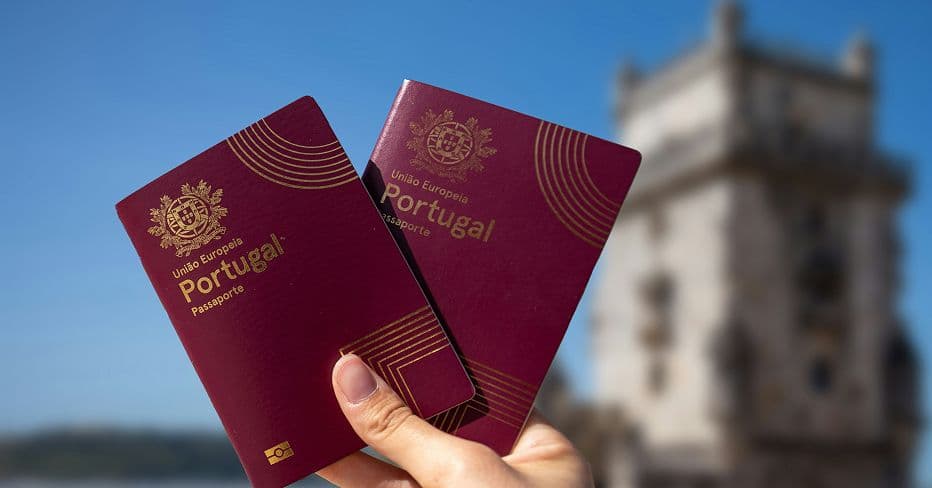
After five years of legal residence and meeting the requirements, it is possible to apply for the Portuguese passport, transforming the remote work experience into a solid path to citizenship.
Other essential requirements:
- Health insurance valid in Portugal
- Proof of accommodation, such as a rental contract or letter of accommodation
- Declaration of no criminal record
Fulfilling these items not only facilitates approval but also ensures a smooth and safe transition to the country.
Advantages of the D8 Visa
The D8 Visa legalizes professional activity, allowing independent work, guaranteeing mobility throughout the Schengen Area, access to public health and quality infrastructure. It paves the way for Portuguese citizenship in the medium term and allows for the inclusion of dependents in the residency depending on the chosen modality.
Tips to better enjoy this experience:
- In major centers like Lisbon and Porto, complete infrastructure, coworking spaces, and an active community of professionals.
- Smaller cities, such as Braga and Coimbra, offer a lower cost of living and good connectivity.
- The Island of Madeira combines low cost of living with contact with nature and digital nomad communities.
Planning expenses for rent, transport, and food, keeping up with changes in legislation, and participating in nomad communities are steps that help with adaptation and make the experience richer and more productive.
Conclusion
The D8 Visa is the gateway to transforming remote work into residency and eventual citizenship in Portugal. With financial planning, document organization, and attention to bureaucratic steps, it is possible to live legally in the country and build a solid path to European citizenship.

Isla Castro
A graduate in Law from the Lusófona University of Lisbon, she obtained the equivalency of her Bachelor of Laws degree from the Federal University of Paraná. She has extensive international experience, having worked as an intern in Immigration Law in the United States and, subsequently, in a company founded by Dutch entrepreneurs in Lisbon dedicated to the analysis of double taxation treaties. She began her career as a lawyer in a large real estate development company in Lisbon, working with investment visas for clients wishing to invest in Portugal. Later, she began her internship with the Portuguese Bar Association, working in large Portuguese law firms where she gained experience in foreign investment, immigration, and litigation. She completed her internship and became a lawyer in July 2025.
Immigration Law, International Law
Legal Briefing
Gain a clearer understanding of the legal landscape to support more assertive decision-making.

D8 Visa for Digital Nomads in Portugal: Everything You Need to Know
A complete guide to the D8 Visa. Understand the logic behind income verification, the updated financial requirements, and how to transform remote work into European citizenship.
Investment Opportunities in Ceará: Growing Sectors and How to Take Advantage of Them
Ceará stands out in green hydrogen production and high-end tourism. Learn how to invest safely, take advantage of tax incentives, and explore expanding sectors.

Golden Visa for Portugal: how the Investment Visa works
Discover how to obtain the Portugal Golden Visa, the types of investments accepted (€500k in funds, culture and research), minimum stay requirements and pathways to citizenship.